Resilience in Real Time: Farmers Markets in a Changing World
Part 4 of our 30th Anniversary Blog Series
This is the final post in our four-part series celebrating 30 years of Vancouver Farmers Markets. So far, we’ve traced the journey from a handful of umbrellas in a parking lot, through a growing city-wide market network, to a decade of innovation and policy leadership that made farmers markets a way of life in Vancouver.
And now, we turn to the most recent chapter — the early 2020s. A period defined by crisis, uncertainty, adaptation, and above all, resilience. These are the years that tested our food system and proved farmers markets are essential local food infrastructure.
Our World Changed Overnight
In March 2020, when COVID-19 shut down cities across the world, there was no guidebook for how to run a farmers market in a pandemic. Suddenly, every aspect of what makes markets joyful — sampling, gathering, crowds, community connectedness — became a risk.
But something else became clear: Markets aren’t just nice-to-haves: – they are essential.
Thanks to our activated network, Vancouver Farmers Markets was recognized by the Province as an essential service, ensuring farmers, bakers, fishers, and small-scale producers could continue earning a living — and Vancouverites could continue accessing fresh, local food.
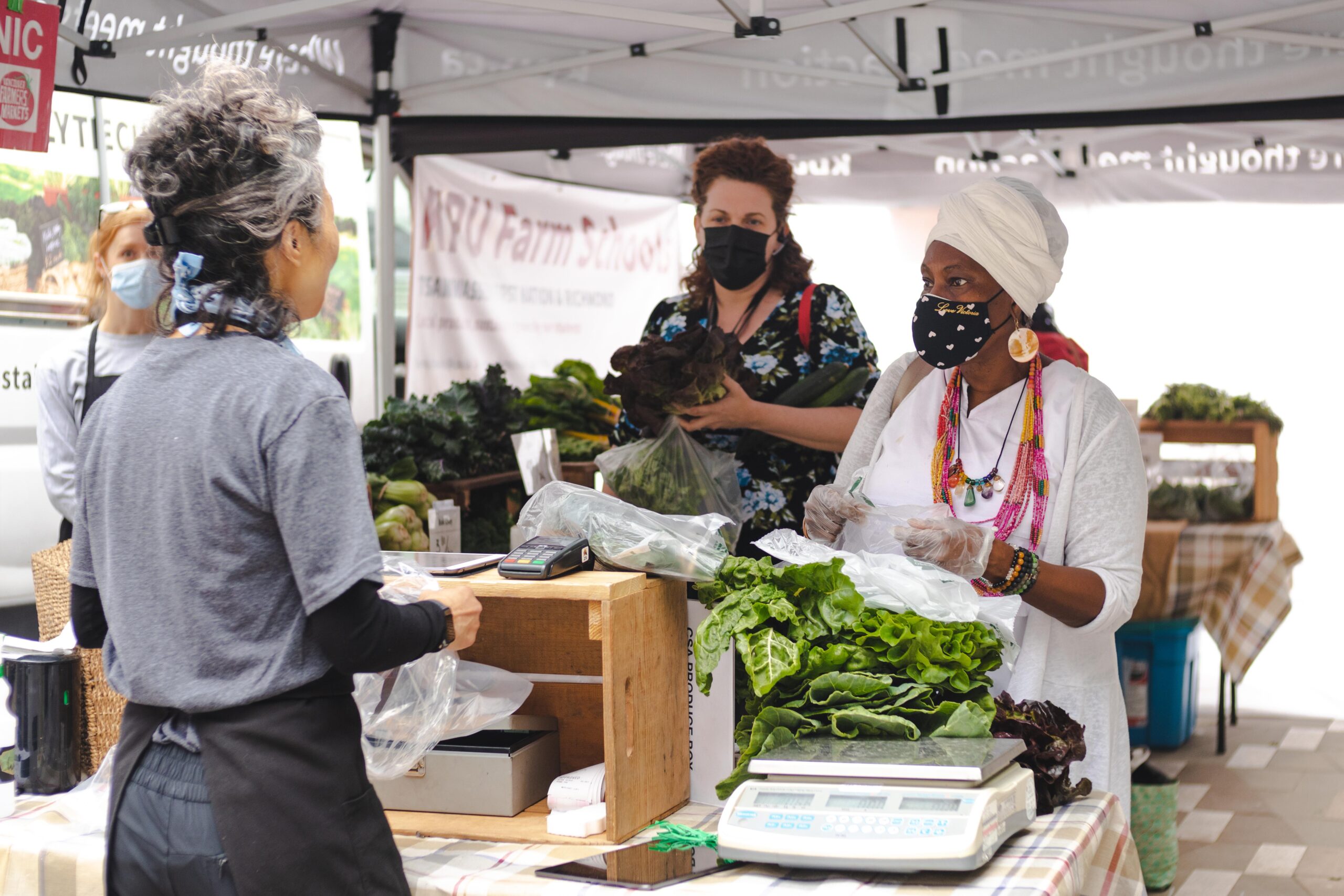
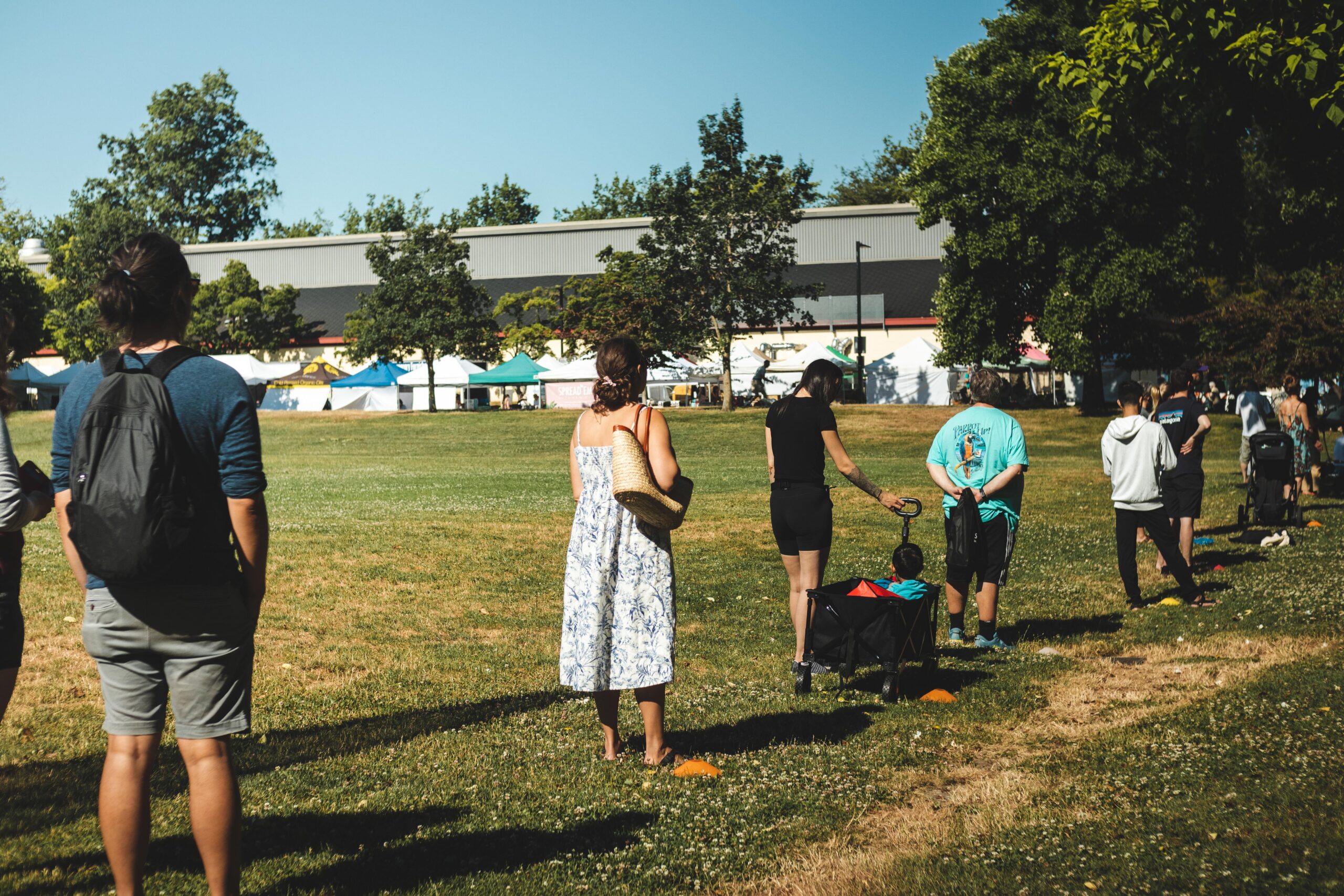
And the markets continued with a new look – tents were spaced out, entrance lines were marked with chalk, hand-sanitizer stations, masks, directional flow, pre-bagged produce — a lot changed.
And yet the most important things stayed the same – neighbours kept coming, farmers kept growing food, markets kept feeding the city.
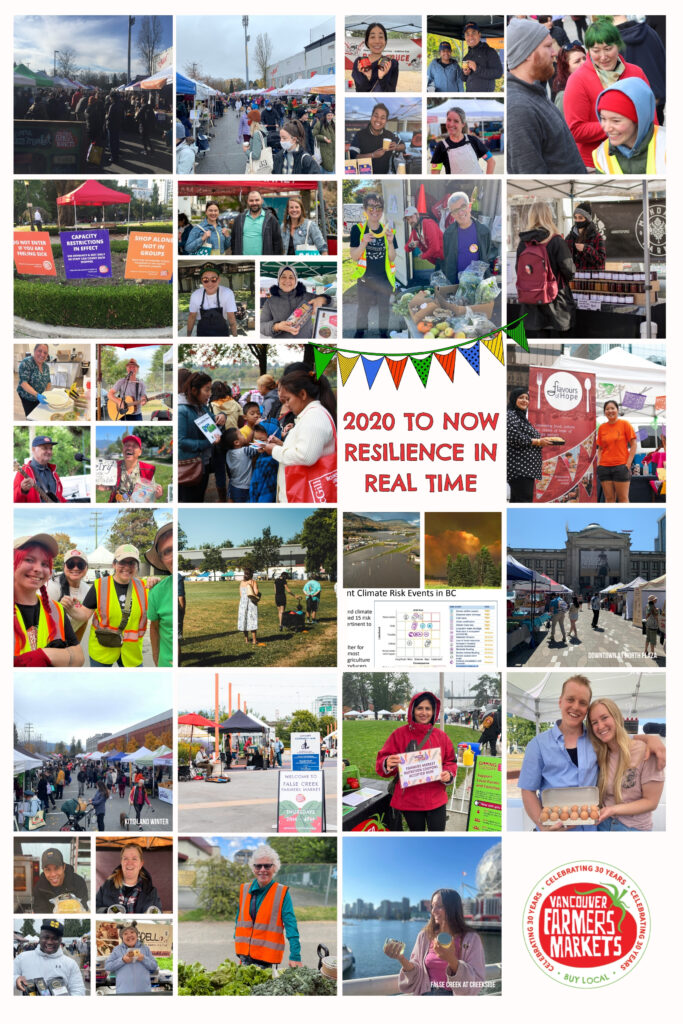
It was resilience in real time.
Navigating Crises Beyond COVID
The pandemic was just one chapter in half a decade filled with disruptions.
The early 2020s also brought:
- Record-breaking wildfire smoke that made operating outdoors challenging
- Floods and highway washouts that cut off producers from the Lower Mainland
- Heat domes and cold snaps that threatened crops, animals, and farm workers
- Rising costs, labour shortages, and climate unpredictability
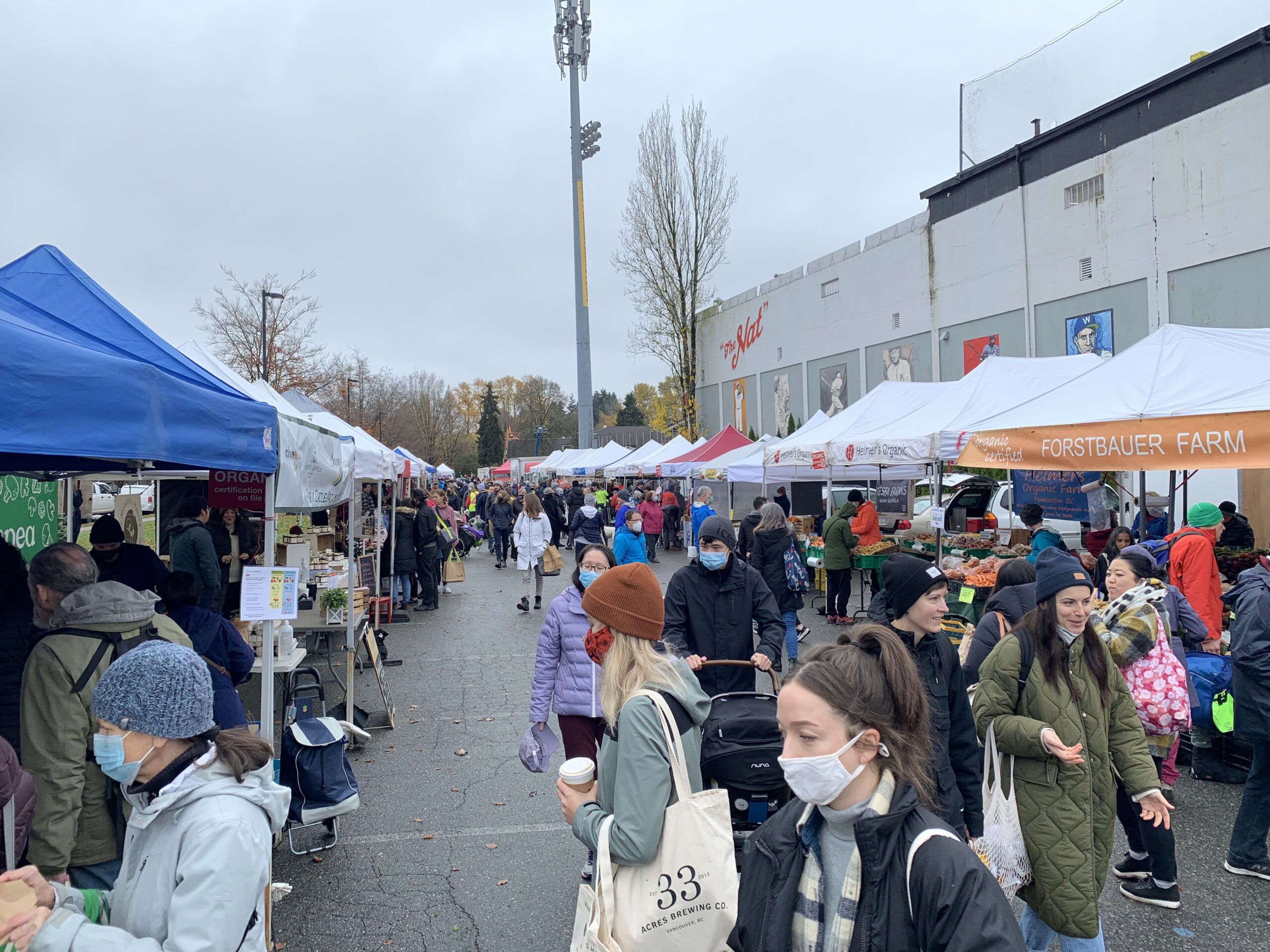
These crises didn’t just test the markets — they tested the farmers and vendors whose livelihoods depend on them and the market staff who constantly adapted operations to keep the markets open, rain or shine, week after week.
And therefore the markets adapted.
- Farmers rerouted delivery routes across the province.
- Customers stocked up during uncertain weeks.
- Staff restructured markets around safety, air quality, and emergency protocols.
- Community members stepped in with donations, volunteering, and support.
Resilience became a way of life.
Strengthening Access When It Matters Most
Alongside these challenges came a renewed commitment to access and equity – more families were food insecure, more seniors were isolated, more people turned to markets as a trusted source of fresh, culturally familiar foods.
VFM responded by deepening and expanding programs such as:
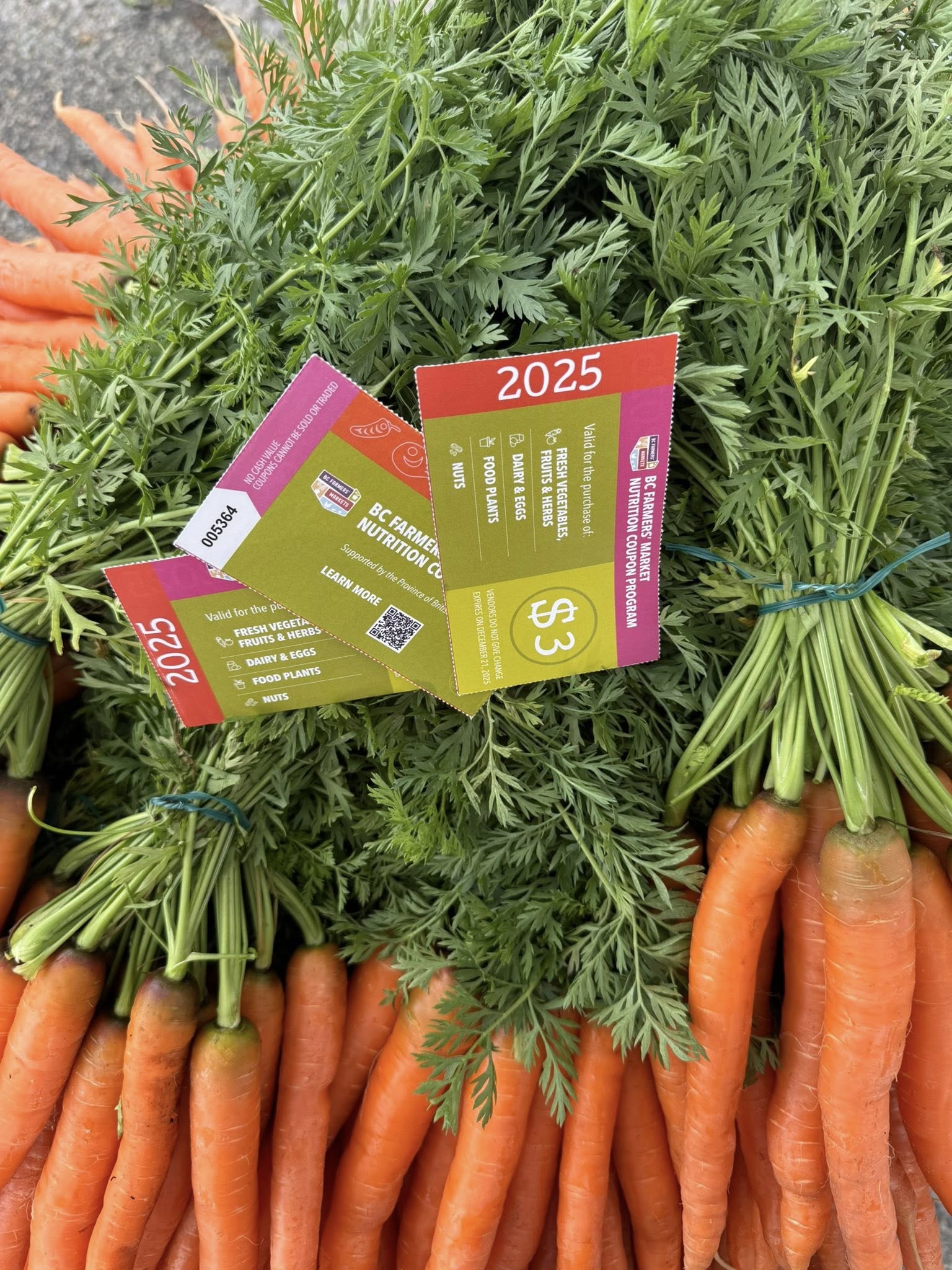
- Fresh to Families, which expanded support to vulnerable households by providing weekly food coupons that connect families with fresh, nutritious, locally grown food while circulating funds back into the farmers markets economy.
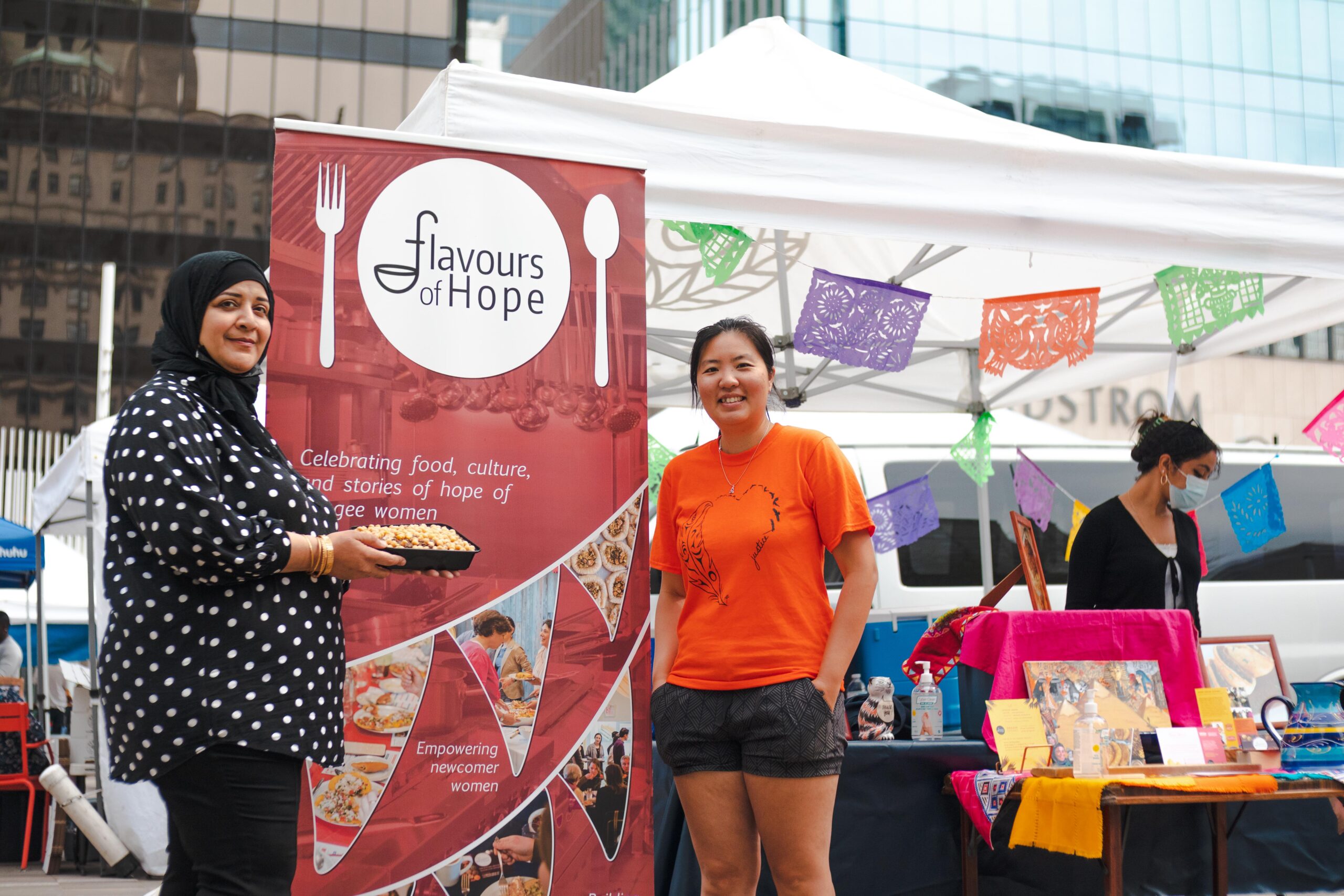
- Dream Cuisines, a partnership-based program supporting newcomer women, to build food-based businesses.
- Indigenous Tourism BC collaborations, which introduced Indigenous food businesses to market spaces.
- Accessibility workarounds at high-traffic markets, including improved site layouts, mobility-friendly pathways, accessible vendor placement, and better customer service protocols.
Because resilience isn’t just surviving the tough times — it’s making sure everyone feels included.
A Renewed Mission for a Changing City
As Vancouver evolves, so does VFM. In the past five years, the organization has:
- Updated its mission, vision, and values to meet the moment
- Reaffirmed its role as essential local food infrastructure
- Begun adapting markets to be more climate-resilient and community-responsive
- Strengthened governance, systems, and long-term planning
- Continued supporting more than 250+ small producers, many of whom rely on markets as their primary sales channel
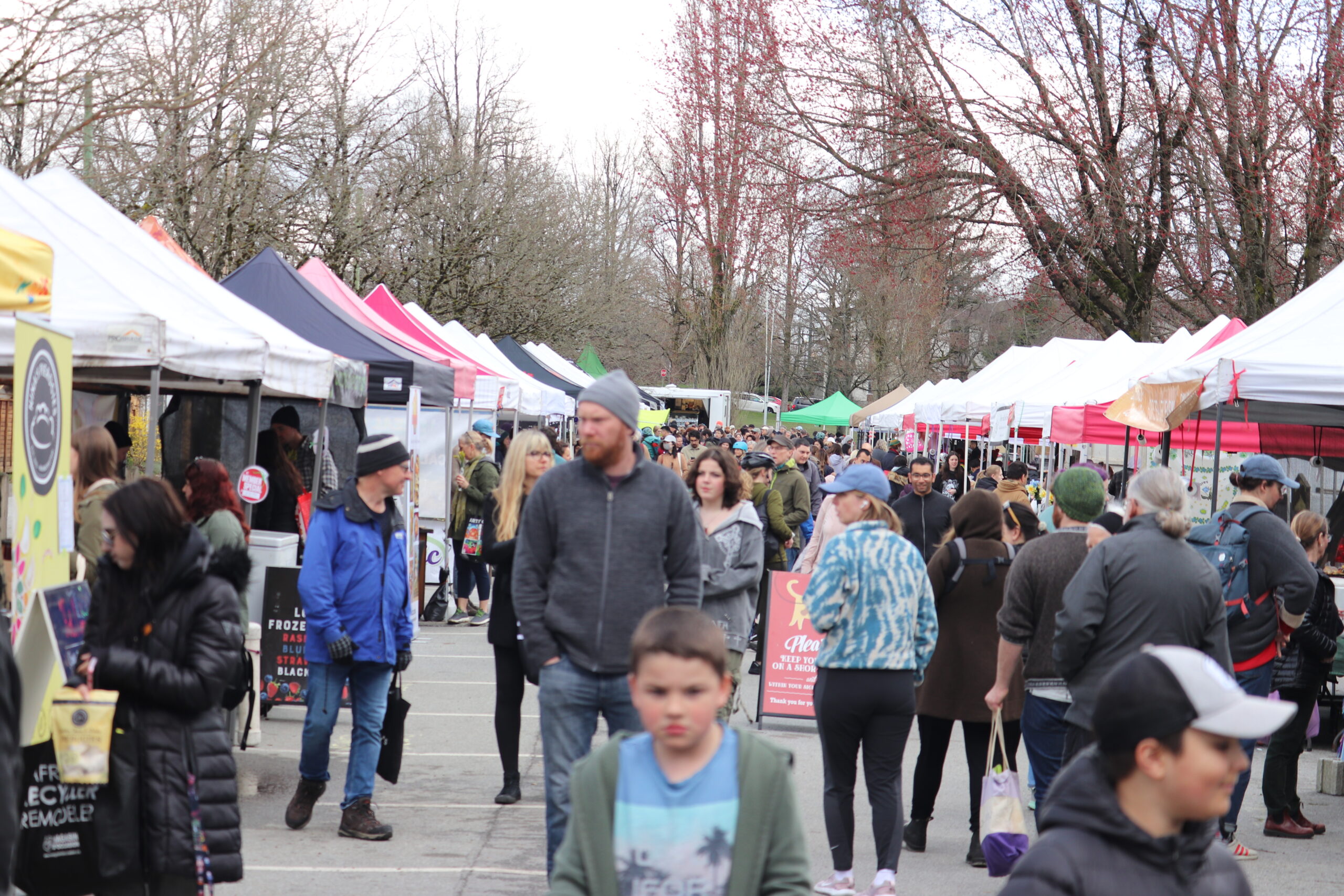
We look forward to meeting the challenges of the next 30 years with hope, joy, and determination. A system that is: Local, Inclusive, Community-focused, Equitable, Resilient.
Concluding the Series — 30 Years of VFM
If the 1990s were about beginnings, the 2000s about expansion, and the 2010s about innovation and advocacy, then the 2020s have been a reminder of why this work matters.
Farmers markets are not just places to shop — they are connections across a city — between rural and urban, farmer and family, land and livelihood.
And this connection holds us together through the ordinary weeks and through the extraordinary days.
Looking Ahead
As we close out our 30th anniversary year, we want to say: Thank You — to the farmers, makers, neighbors, volunteers, shoppers, staff, advocates, and partners who held these markets together through three decades of change.
We don’t know exactly what the next 30 years will bring. But we know this — as long as Vancouver needs local food, community connection, and resilient systems, farmers markets will be part of the solution.
And together, we’ll keep growing.