
Five Ways a Garden Enriches a School Community
{Sponsored Content} Crofton House School is our Market Sponsor this season.
A school garden is more than a beautiful green space. It is a place where learning becomes hands-on, and students begin to see themselves as active participants in a larger community.
Crofton House School’s school garden has come to life in ways that are already making an impact. This past year, it even inspired the creation of a Gardening Club for Senior School students.
Here are five ways (of many!) that a campus garden like Crofton House’s can enrich a school community:
A Living Classroom
A garden turns abstract ideas into visible learning. Rutgers NJAES describes school gardens as “living laboratories” where students can see and experience firsthand what they are learning, making academic concepts tangible.
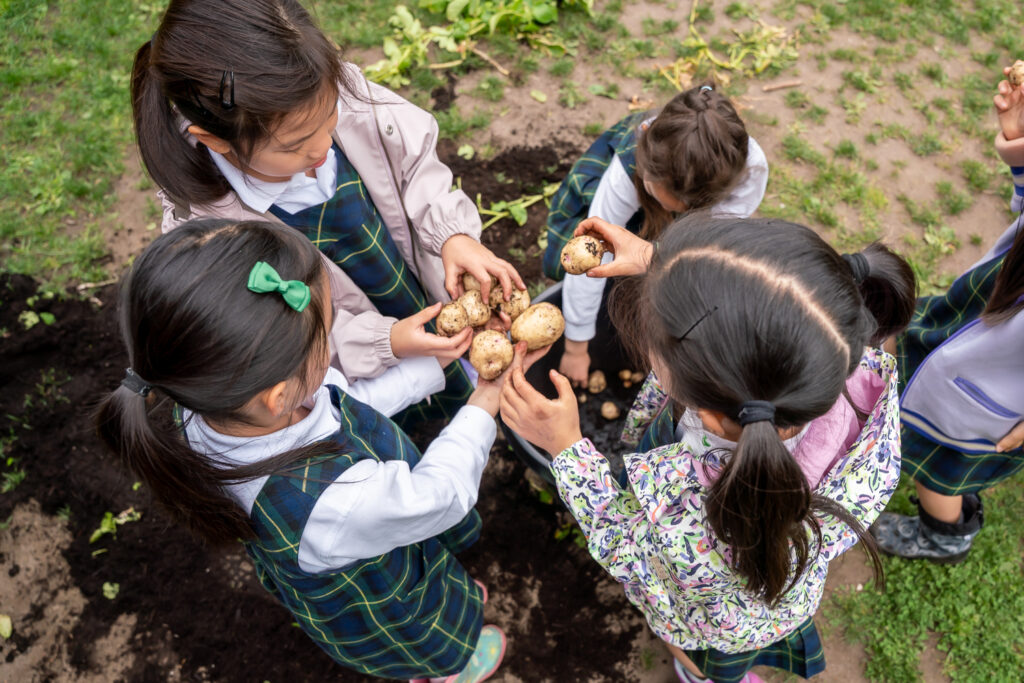
In science, Grade 1 CHS students learn about the life cycle of potatoes firsthand. “At this age, the wonder is right there,” Ms. Yorath, Grade 1 Teacher, said. “They are asking questions, making predictions, noticing changes, and beginning to understand that science is something they can do.”
Understanding Nutrition & Well-Being
Gardens help students connect more meaningfully with food, nutrition, and well-being. Farm to Cafeteria Canada notes that school gardens help children learn about nutrition. Research also suggests that school gardens may support healthier eating habits!
Skills That Grow Over Time
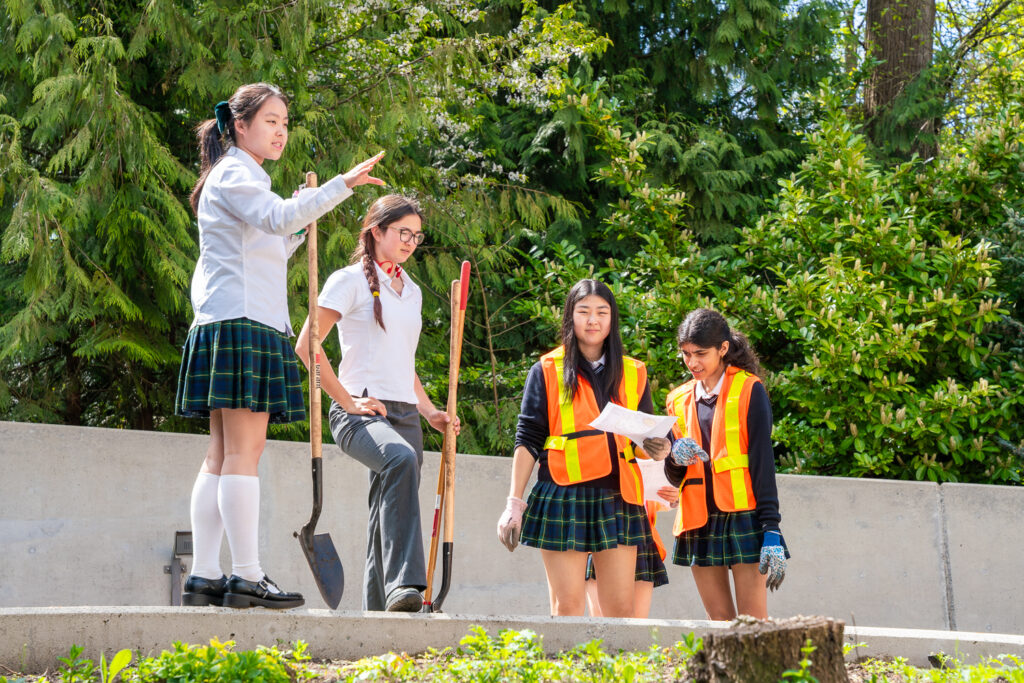
Gardening asks students to plan, observe, collaborate, and adapt. Stanford’s review found that environmental education supports personal growth and civic engagement, including confidence, agency, and leadership. Similarly, a 2005 study found that students in a year-long garden program improved skills like teamwork and self-understanding.
“You need to remain flexible. I’m really grateful that I learned about that this year, especially in terms of being a leader,” Bella, Grade 11 and Gardening Club Co-Captain, said.
Belonging and Connection
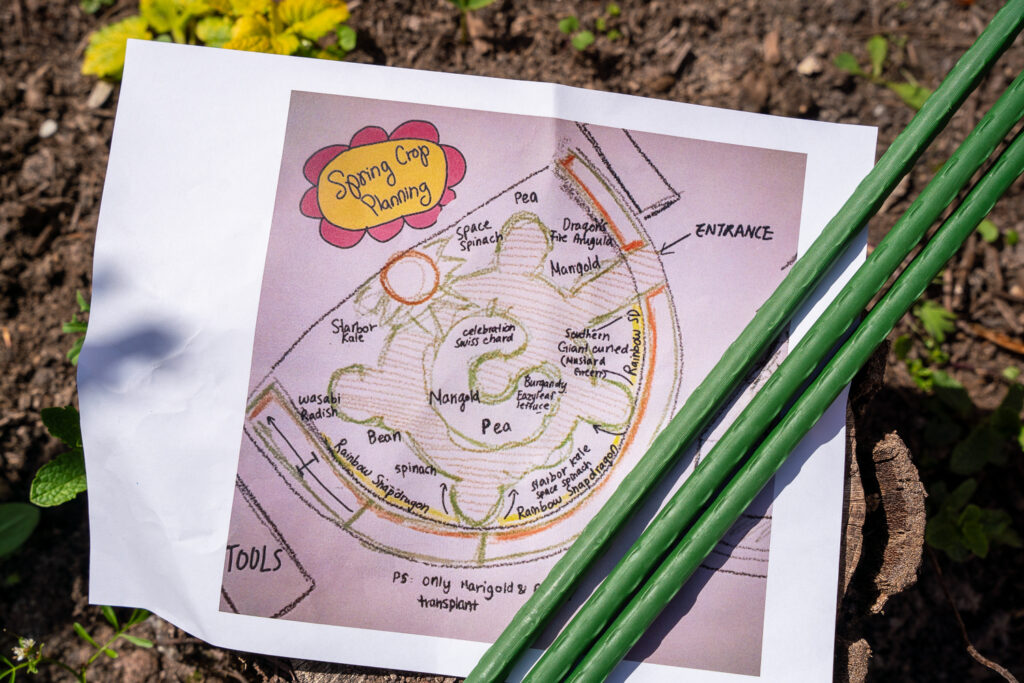
A garden can become a shared space that strengthens a sense of belonging within a school community. Students, teachers, staff, and even families can all play a role in caring for it. Some students may lead planting or harvesting, while others may document changes, manage labels, or help with upkeep. There are so many ways to contribute!
Stewardship in Action
A school garden helps sustainability feel real. “The concept of sustainability ties into that circular system where you’re able to eat what you grow, as well as food sovereignty and being able to know where your food comes from,” Bella said. “That’s the ultimate goal, being fully transparent about where food comes from.”
A Space with Lasting Impact
No matter its size and scale, a school garden supports learning, strengthens life skills, builds community, and helps students develop a deeper respect for the environment and the food they eat. It is a place where growth happens slowly, but meaningfully—in the soil, in the classroom, and in the people who tend it!
Interested in learning more about Crofton House and the many ways the School brings learning to life? Click here to experience the CHS community firsthand and discover what a Crofton House education could mean for your daughter.